 +86-19862000127
Inquiry
Form loading...
-
WhatsApp
-
 Phone
Phone -
Phone
-
 Email
Email -
Email
Choosing a reliable Locking Pulley supplier is not simply a price comparison. Buyers must examine load capacity, rope compatibility, locking performance, corrosion resistance, testing records, and after-sales support. A pulley may look robust on a product page, yet its brake can respond poorly under dust, moisture, or repeated shock loading. Small details matter.
Recent market analyses support this cautious approach. Grand View Research’s 2024 conveyor belt market report identifies expanding automation, material handling, and industrial infrastructure as major demand drivers. MarketsandMarkets also links lifting-equipment growth with stricter attention to operational safety and efficiency. These reports do not isolate every Locking Pulley application, but they show why dependable motion-control components deserve closer evaluation. The market is growing. Quality is not uniform.
Mechanical engineer Robert L. Mott wrote, “The function of a belt drive is to transmit power from one shaft to another.” His principle is simple, but it remains practical: component selection must match the complete system, not one impressive specification. For global buyers, this means checking certifications, factory experience, material traceability, customization capability, and performance evidence. The following list of the Top 10 Locking Pulley Manufacturers for Global Buyers compares these factors across established suppliers. No ranking is perfect. Some manufacturers publish clearer data than others, while regional service quality can change the buying decision. Readers should still verify current test reports, warranty terms, and local installation requirements before placing an order.
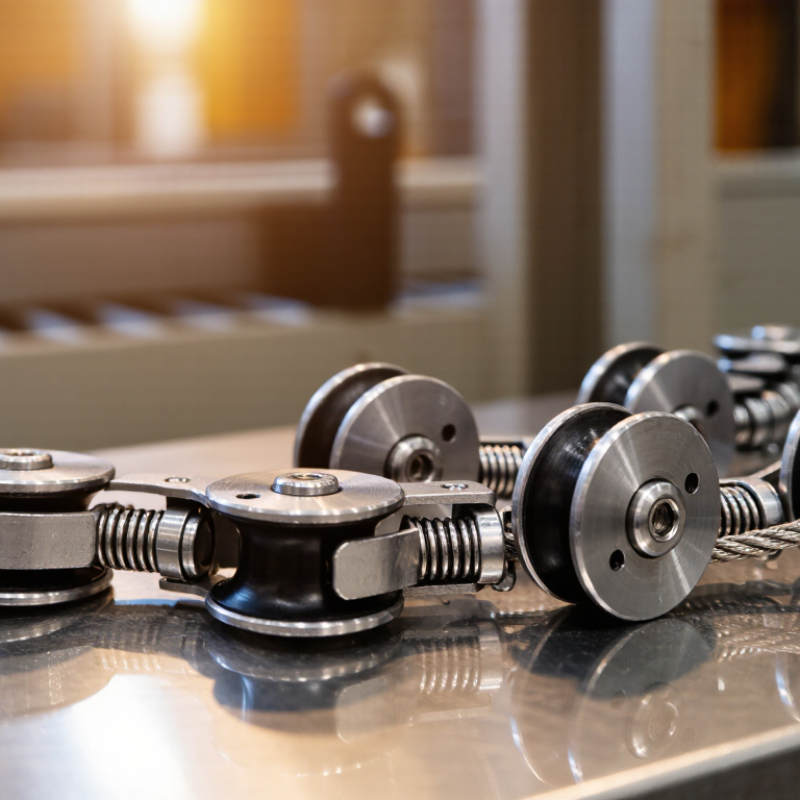
A locking pulley combines a wheel, side plates, and a rope-retaining mechanism. It redirects rope movement while helping prevent unwanted reverse travel. Unlike a standard pulley, its locking system can hold the rope when tension changes suddenly.
Many models use a cam, toothed wheel, or friction brake. When the rope moves in the intended direction, the mechanism rotates freely. When the load pulls backward, the cam presses against the rope and increases friction. The rope stops. Small details matter. Rope diameter, surface condition, and loading direction all affect performance. A pulley designed for a 10-millimeter rope may grip poorly on a thinner line.
In practical use, a worker may pull equipment upward, pause, and adjust position without constantly holding the rope. The load remains supported when the mechanism is correctly installed. However, locking does not mean unlimited security. Shock loading, worn rope fibers, contamination, or incorrect threading can reduce holding power. This part is easy to underestimate. I have found that clear markings and simple operation often matter as much as maximum capacity. Buyers should check rated working loads, compatible rope sizes, test standards, corrosion resistance, and inspection guidance. Reliable suppliers should provide traceable specifications, not vague performance claims. A careful pre-use check should examine the cam, axle, plates, and rope path for damage or unusual wear.
Locking pulleys combine a sheave with a rope-retention or braking mechanism. Depending on the design, the mechanism can hold the rope when the pulling force is released, reduce accidental back-sliding, or secure a suspended load. The specifications below represent commonly available industrial and recreational product ranges; exact values must be confirmed against the manufacturer’s technical datasheet and applicable safety standard.
| Rank | Supplier Profile | Primary Locking Mechanism | Typical Working Load Range | Compatible Rope Diameter | Common Materials | Typical Applications | Buyer Verification Priorities |
|---|---|---|---|---|---|---|---|
| 1 | Industrial fixed-sheave supplier | Rope-grab or cam-lock system | 250–2,000 kg, depending on model | 8–16 mm | Galvanized steel, stainless steel, aluminum | Material handling, lifting fixtures, maintenance work | Working load limit, side-load resistance, mounting-hole pattern |
| 2 | Marine control-line supplier | Cam cleat with fairlead | 100–600 kg | 4–10 mm | Anodized aluminum, stainless steel, polymer | Sail controls, winch lines, light-duty marine systems | Corrosion resistance, rope-angle range, release ergonomics |
| 3 | Rescue and rope-access supplier | Progress-capture cam | 100–150 kg per user system; product-specific | 10–13 mm | Forged aluminum, stainless steel, reinforced polymer | Rescue hauling, rope access, confined-space systems | Relevant rescue standard, compatibility with kernmantle rope, inspection points |
| 4 | Theatrical rigging supplier | Brake-assisted or ratchet locking system | 100–500 kg | 8–12 mm | Steel, aluminum, acetal or nylon sheave | Stage lines, counterweight assistance, temporary rigging | Static-load rating, noise level, brake engagement and release behavior |
| 5 | Construction lifting supplier | Self-locking rope clamp | 300–1,500 kg | 10–16 mm | Powder-coated steel, ductile iron, steel axle | Building maintenance, service lifting, temporary hoisting | Load certification, rope path, fall-protection limitations, latch design |
| 6 | Sailing and outdoor equipment supplier | Cam cleat with locking jaw | 50–300 kg | 3–8 mm | Composite polymer, aluminum, stainless steel | Tents, awnings, small craft, adjustable tension lines | Jaw wear, UV resistance, minimum rope diameter, release force |
| 7 | Agricultural and utility supplier | Friction-lock pulley with retaining gate | 100–800 kg | 8–14 mm | Zinc-plated steel, stainless steel, nylon | Shade systems, farm equipment, utility-line adjustment | Outdoor durability, dirt tolerance, gate security, replacement parts |
| 8 | Fitness and rehabilitation supplier | Cable pulley with adjustable locking pin | 50–250 kg | 3–6 mm cable or cord | Steel, nylon wheel, rubber-coated components | Exercise machines, therapy equipment, adjustable resistance systems | Smooth rotation, guarding, cable compatibility, cycle-life testing |
| 9 | Window and shade hardware supplier | Cord lock with spring-loaded cam | 10–80 kg | 2–5 mm cord | Acetal, ABS, zinc alloy, stainless spring | Blinds, shades, retractable screens, light-duty positioning | Child-safety requirements, cycle life, cord retention and installation method |
| 10 | Custom OEM pulley supplier | Application-specific brake, cam or ratchet | Defined by engineering specification | 2–20 mm | Engineering polymer, aluminum, carbon steel, stainless steel | Automation, medical equipment, specialized machinery | Prototype validation, fatigue testing, tolerances, traceability and quality system |
| Mechanism | Operating Principle | Main Advantage | Important Limitation |
|---|---|---|---|
| Cam lock | A spring-loaded or load-activated cam grips the rope when tension changes direction or the rope is released. | Fast engagement and simple operation. | Performance depends on rope diameter, surface condition and cam compatibility. |
| Ratchet lock | A toothed wheel and pawl permit movement in one direction while preventing reverse rotation. | Positive holding action and controlled adjustment. | Requires inspection of teeth, pawl engagement and release mechanism. |
| Friction brake | Brake pads or a friction surface create resistance against sheave or drum rotation. | Smooth load control and gradual stopping. | Heat, contamination and wear can reduce braking performance. |
| Rope-grab system | A movable grab or clamp travels with the rope and locks under a sudden load or reverse movement. | Useful for progress capture and fall-arrest-related systems when specifically certified. | Not every rope grab is suitable for lifting or fall protection; certification is application-specific. |
Safety note: Working load limits, minimum breaking strength, safety factors and certification requirements vary by design and application. A locking pulley should never be used for personnel lifting, fall arrest or overhead loads unless the complete system is specifically rated and approved for that purpose.