 +86-19862000127
Inquiry
Form loading...
-
WhatsApp
-
 Phone
Phone -
Phone
-
 Email
Email -
Email
Choosing the right Ceiling Pulley begins with more than comparing prices or shiny metal finishes. It requires a clear understanding of your ceiling structure, lifting purpose, load weight, and working frequency. A pulley for hanging storage bins may differ greatly from one used for lighting, gym equipment, or workshop materials. Small details matter. Fast.
During equipment inspections, lifting consultant Daniel Harper often advises, “A ceiling pulley is only as reliable as the structure, rope, and routine supporting it.” This practical view reflects an important safety lesson. The pulley itself is rarely the only concern. Anchors, fasteners, rope diameter, sheave alignment, and safe working load all deserve careful attention. A smooth pull can still hide a weak mounting point.
This guide explains how to choose a Ceiling Pulley based on real working conditions. You will learn how to compare fixed and movable designs, assess materials, and identify useful safety features. We will also consider ceiling height, available clearance, corrosion exposure, and maintenance access. These factors can change the right choice. They can also change your budget.
Some recommendations may seem obvious, yet common mistakes remain. People often measure the load but forget the lifting distance. Others choose a compact model without checking anchor compatibility. I have made similar assumptions when selecting hardware for overhead storage. They looked reasonable at first. They were not always practical.
Use this information as a careful starting point, not a substitute for structural advice. When loads are valuable, heavy, or used frequently, consult a qualified professional. Reliability comes from matching every component to the job.
How to Choose the Best Ceiling Pulley for Your Needs?
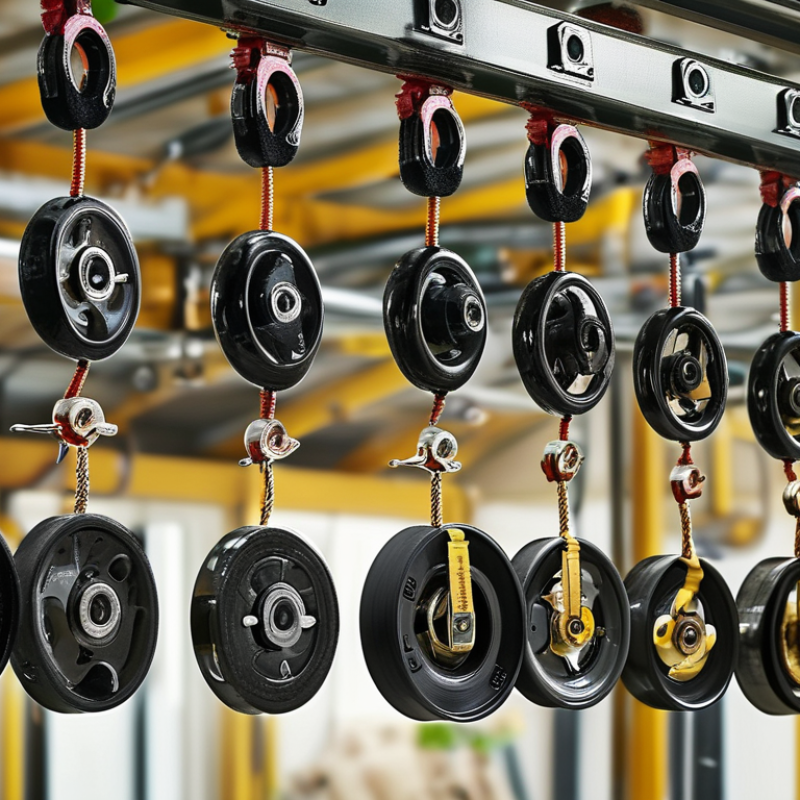
Start with the load. A ceiling pulley changes lifting direction, reduces effort, or supports controlled positioning. Fixed pulleys suit simple direction changes. Swivel pulleys follow moving loads and reduce side pulling. Double pulleys provide better rope control. Block-and-tackle systems increase mechanical advantage, but they also require more rope and ceiling space. Counterweighted pulleys work well for repeated movement, such as raising lights or storage platforms.
Check the working load limit, rope diameter, sheave size, bearing type, and mounting structure. The pulley must match the rope, not merely look strong. A narrow sheave can damage rope fibers through repeated bending. A weak anchor can fail before the pulley does. ASME B30.16 emphasizes rated equipment, inspection, and controlled operation for overhead lifting systems. That detail matters. A professional installer should inspect cracks, deformation, unusual noise, and loose fasteners before regular use.
Safety data supports this caution. The U.S. Bureau of Labor Statistics reported 1,069 construction fatalities in 2022, including 395 deaths from falls. OSHA also identifies falls as a leading construction hazard. These figures do not measure pulley failures specifically, but they show why secure mounting and load control deserve attention. In practical testing, move the load slowly and observe rope tracking. I still see people choosing by maximum capacity alone. That is incomplete. A larger pulley may be safer, yet it can overload a ceiling joist if installed without structural review.
| Pulley Type | Main Function | Typical Applications | Common Construction | Mechanical Advantage | Key Benefits | Main Limitations | Best Selection Criteria |
|---|---|---|---|---|---|---|---|
| Fixed Single Pulley | Changes the direction of the pulling force without significantly reducing the load force. | Light-duty lifting, clotheslines, stage curtains, flag systems, and simple overhead routing. | One grooved wheel mounted in a fixed bracket; the sheave is commonly made from steel, stainless steel, aluminum, or engineering plastic. | Approximately 1:1, excluding friction. | Simple installation, compact design, low maintenance, and easy rope or cable routing. | Provides little or no lifting-force reduction; the mounting point carries the full working load. | Choose it when the main requirement is redirecting the rope rather than multiplying lifting force. |
| Fixed Double Pulley | Routes a rope or cable through two sheaves and can support separate lines or change the pulling direction twice. | Two-line routing, adjustable fixtures, light equipment handling, and compact overhead systems. | Two adjacent sheaves in a shared fixed frame, usually with plain or ball bearings. | Usually approximately 1:1 for each independent line. | More routing flexibility than a single sheave while maintaining a compact footprint. | Does not automatically provide a 2:1 lifting advantage when both lines are independent. | Select based on the number of lines, rope diameter, sheave spacing, and available ceiling clearance. |
| Single Movable Pulley | Moves with the load and shares the load between two rope segments. | Manual lifting aids, temporary rigging arrangements, light workshop lifting, and positioning systems. | One sheave mounted in a moving block or hook assembly. | Approximately 2:1, excluding friction, when the rope end is anchored correctly. | Reduces the input force required to lift a load compared with a fixed pulley. | Requires more rope travel, provides slower load movement, and needs adequate headroom. | Use when force reduction is more important than lifting speed and the supporting structure is properly rated. |
| Block and Tackle | Combines fixed and movable sheaves to multiply mechanical advantage. | Manual hoisting, theatrical systems, maintenance work, and controlled positioning of moderate loads. | Two or more sheaves arranged in separate or combined blocks with a rope or wire rope. | Depends on the number of supporting rope parts; ideal mechanical advantage is approximately equal to that number. | Can substantially reduce manual lifting force and provide controlled movement. | More friction, rope travel, installation complexity, and load-induced wear as the number of sheaves increases. | Match the sheave count, rope construction, working load limit, and available installation height to the task. |
| Swivel Ceiling Pulley | Allows the pulley body or eye to rotate so the rope can align with changing pull directions. | Exercise equipment, retractable fixtures, adjustable cables, and applications where side loading may occur. | Sheave assembly mounted on a swivel eye, swivel hook, or rotating bracket. | Usually 1:1 for a fixed swivel pulley; the swivel changes alignment rather than increasing mechanical advantage. | Helps reduce rope misalignment and can lower bending or rubbing caused by changing pull angles. | Swivel components may wear faster under continuous rotation or shock loading; rotation is not a substitute for correct installation. | Choose a swivel design when the pulling direction changes, and verify that the swivel is rated for the intended load. |
| Locking or Brake Pulley | Supports controlled raising and holding by incorporating a cam, brake, or locking mechanism. | Adjustable hanging lights, lifting accessories, window systems, training equipment, and positioning devices. | Grooved sheave with a rope-locking or braking mechanism, often combined with a fixed or swivel mount. | Commonly 1:1 or 2:1, depending on the pulley arrangement; the lock function does not itself create mechanical advantage. | Helps prevent unintended rope movement when correctly engaged and operated. | Locking action can be affected by rope type, rope diameter, wear, contamination, or incorrect loading direction. | Confirm compatibility with the specified rope, the approved load direction, and the manufacturer’s working load limit. |
| Cable or Wire-Rope Sheave | Guides and supports wire rope while reducing rubbing and bending at an overhead change of direction. | Winches, garage doors, lifting systems, industrial equipment, and architectural cable installations. | Machined or cast metal sheave with a groove sized for wire rope; may use bearings or bushings. | Typically 1:1 when used as a fixed redirecting sheave; a system advantage depends on the overall reeving arrangement. | Suitable for higher tension and repeated cable routing when correctly sized. | An incorrect groove profile or undersized sheave can accelerate wire-rope wear and fatigue. | Match the groove profile, rope diameter, sheave diameter, working load, and duty cycle to the cable specification. |
| Decorative or Light-Duty Ceiling Pulley | Provides visual cable or rope routing and supports low-load adjustment or display functions. | Interior displays, lightweight fixtures, blinds, small storage systems, and non-critical decorative installations. | Small metal, wood, or polymer sheave in a compact bracket. | Often approximately 1:1; some designs may provide 2:1 when used as a movable pulley. | Compact appearance, simple operation, and suitability for low-load environments. | Generally unsuitable for personnel lifting, shock loads, heavy equipment, or safety-critical applications. | Use only within the stated working load limit and select a load-rated lifting product for any consequential load. |
Selection note: Always verify the working load limit, rope or cable compatibility, ceiling-anchor capacity, installation direction, environmental conditions, and inspection requirements. Mechanical advantage values shown are ideal approximations; friction, pulley efficiency, rope condition, and reeving geometry reduce the actual lifting advantage. Never use a general-purpose ceiling pulley for lifting or supporting people unless it is specifically designed, rated, installed, and inspected for that purpose.