How to Use Hanging Pulley for Effective Home Workouts and Exercises
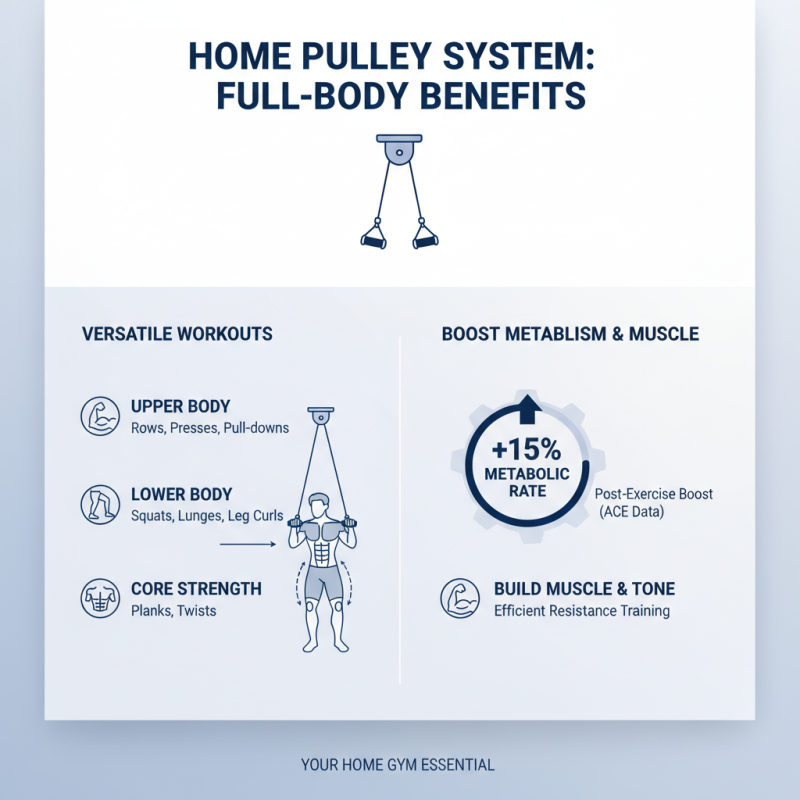
When it comes to maximizing the effectiveness of home workouts, incorporating a "Hanging Pulley" system can make a substantial difference. Expert fitness trainer James Weller emphasizes, "The versatility of the Hanging Pulley allows users to target multiple muscle groups with minimal equipment, making it an essential addition to any home gym." By utilizing this innovative equipment, individuals can perform a wide range of exercises that not only improve strength but also enhance flexibility and coordination.
The appeal of the Hanging Pulley lies in its ability to provide resistance training that is adaptable to various fitness levels. Whether you're a seasoned athlete or just embarking on your fitness journey, this versatile tool can help you achieve your personal goals more effectively. Moreover, the space-saving design of Hanging Pulley systems ensures that you can fit a comprehensive workout regimen into your home, regardless of size constraints.
In this guide, we will explore the best practices for incorporating a Hanging Pulley into your routine, ensuring that you harness its full potential. From understanding the mechanics to discovering exciting exercises, you'll find that the Hanging Pulley is a game-changer for home workouts.
Choosing the Right Hanging Pulley System for Your Home Gym
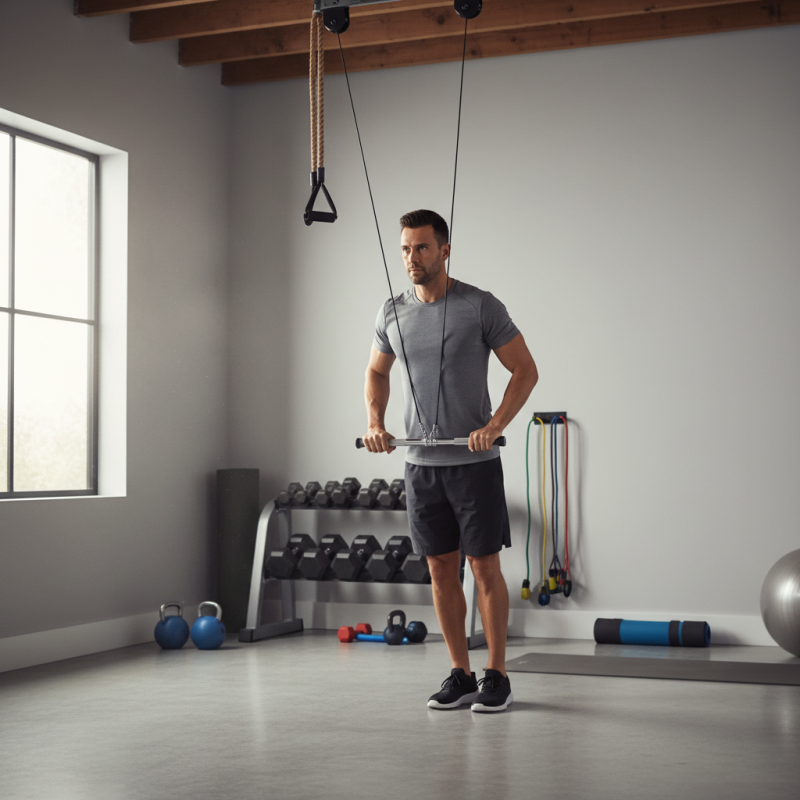
When setting up a home gym, selecting the appropriate hanging pulley system is vital to maximizing your workout efficiency. According to a report by the International Health, Racquet & Sportsclub Association (IHRSA), over 20% of fitness enthusiasts prefer at-home workouts, underscoring the need for effective training tools like the hanging pulley. A suitable system should offer adjustable resistance levels and a range of attachments to target different muscle groups.
When choosing a hanging pulley, consider factors such as space, durability, and ease of installation. Systems with greater versatility can enhance your workout variety. For instance, select a model that accommodates single and dual pulley setups, enabling exercises from various angles. Ensure that the pulley system you choose has a high weight capacity, ideally around 200-300 pounds, to cater to different fitness levels and exercise types.
**Tips:** Always check the user reviews and ratings before purchasing a pulley system to gauge reliability. Additionally, making sure the setup includes mounting hardware can save you time and effort during installation. Don’t forget to utilize the pulley for functional movements, such as cable rows and tricep extensions, to achieve balanced muscle development.
How to Use Hanging Pulley for Effective Home Workouts and Exercises
| Exercise |
Target Muscles |
Equipment Needed |
Repetitions |
Tips |
| Lat Pulldown |
Latissimus Dorsi, Biceps |
Hanging Pulley, Weight Plates |
10-15 |
Keep your back straight and pull down smoothly. |
| Seated Row |
Back, Biceps |
Hanging Pulley, Seat |
10-15 |
Maintain a strong core and pull with your back. |
| Chest Fly |
Pectorals, Shoulders |
Hanging Pulley, Weight Plates |
10-15 |
Focus on a wide arc during the movement. |
| Tricep Extension |
Triceps |
Hanging Pulley |
10-15 |
Keep elbows locked in place to isolate the triceps. |
Setting Up Your Hanging Pulley for Maximum Efficiency and Safety
Setting up your hanging pulley system correctly is crucial for maximizing efficiency and safety during your home workouts. According to a study published in the Journal of Strength and Conditioning Research, improper setup can lead to increased injury risk, underscoring the importance of secure installation. Begin by selecting a sturdy anchor point that can easily support your body weight plus additional resistance. A ceiling beam or a wall-mounted system specifically designed for pulleys is ideal. Make sure to use high-quality hardware that can endure the strain you will place on it. Regularly check for wear and tear on the equipment to maintain safety standards.
Tips: Always test the anchor before use by applying pressure gradually. If you notice any movement or sound of stress, reassess your setup to ensure it's adequately secured.
When setting up the pulley, pay attention to the height and angle. The pulley should be positioned such that it allows for a full range of motion without constraints. The American Council on Exercise (ACE) recommends positioning the pulley at waist height for upper body exercises and at knee height for lower body workouts. This ensures that you engage your muscles effectively while reducing the chance of injury. Consider using a mat or cushioned surface beneath your workout area for added safety.
Tips: Use a mirror to check your form throughout your movements—it can help you maintain proper posture and alignment.
Key Exercises to Perform with a Hanging Pulley for Full-Body Workouts
The hanging pulley system is a versatile piece of equipment that allows for a variety of exercises targeting different muscle groups, making it ideal for full-body workouts at home. According to data from the American Council on Exercise, incorporating resistance training into your routine not only builds muscle but can also boost metabolic rate by up to 15% post-exercise. This is where the hanging pulley can truly shine, enabling users to perform both upper and lower body workouts effectively.
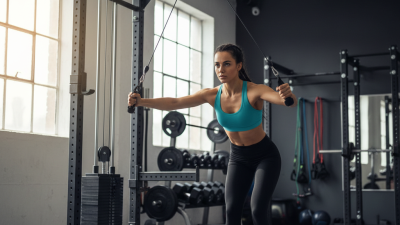
Key exercises that can be performed using a hanging pulley include the lat pull-down, triceps pushdown, and cable leg raises. The lat pull-down targets the upper back and shoulders, helping to improve posture and upper body strength. In fact, a study published in the Journal of Strength and Conditioning Research highlighted that exercises like these contribute significantly to muscle hypertrophy when performed consistently. Additionally, triceps pushdowns are excellent for building arm strength, while cable leg raises engage the core, promoting stability and flexibility. By incorporating these exercises into a structured workout regime, individuals can achieve comprehensive fitness goals without the need for multiple machines or weights.
Tips for Progressing Your Workouts with Hanging Pulley Resistance
Incorporating a hanging pulley into your workout routine can significantly enhance your strength training capabilities at home. To effectively progress your workouts with pulley resistance, it's essential to start with basic exercises that focus on form and technique. Begin with a simple lat pull-down or chest fly, allowing your body to adapt to the resistance offered by the pulley. As you grow comfortable, gradually increase the weight or resistance, challenging your muscles with each session. This progressive overload principle ensures continuous improvement and prevents plateaus in your training.
Another effective way to progress is by varying your grip and angles during exercises. Switching from a pronated (overhand) grip to a supinated (underhand) grip can target different muscle groups and provide a new stimulus for growth. Additionally, incorporating movements like single-arm rows or lateral raises can help isolate specific muscles, enhancing balance and coordination. Remember to track your progress regularly, as this can motivate you to push harder and explore more complex movements. By strategically increasing resistance and diversifying your exercises, you can maximize the benefits of your hanging pulley workouts and achieve your fitness goals efficiently.
Common Mistakes to Avoid When Using a Hanging Pulley at Home
When using a hanging pulley for home workouts, avoiding common mistakes can significantly enhance your training effectiveness and reduce the risk of injury. One major mistake is neglecting proper setup and height adjustment. Users often overlook the importance of ensuring that the pulley system is securely anchored and positioned at the appropriate height for their specific exercises. This oversight can lead to imbalances and ineffective workouts. Always ensure that the cable is taut and that the path of motion is clear, allowing for smooth and controlled movements.
Another frequent error is poor body positioning during exercises. Many individuals make the mistake of using improper form when pulling or pushing, which can strain muscles and joints. It is essential to maintain a neutral spine and engage the core to stabilize the body throughout the movement. Additionally, be mindful of your grip and hand placement on the handles, as incorrect positioning can lead to unnecessary stress on your wrists and shoulders. Taking the time to focus on your form not only maximizes the effectiveness of your workout but also fosters a safer exercise environment.
Hanging Pulley Workout Effectiveness
This chart illustrates the effectiveness ratings for various exercises performed with a hanging pulley system, with each exercise rated on a scale from 1 to 10 based on user experience and feedback. This can help users choose the best exercises to incorporate into their home workouts while avoiding common mistakes.



 +86-19862000127
 Phone
Phone Email
Email