 +86-19862000127
Inquiry
Form loading...
-
WhatsApp
-
 Phone
Phone -
Phone
-
 Email
Email -
Email
Choosing the right 8mm Htd Pulley in 2026 requires more than matching tooth pitch and bore size.
It demands careful attention to torque, speed, belt width, material, alignment, and operating temperature.
A pulley can look correct, yet fail under shock loading or poor flange control.
Industry forecasts support continued demand for precision power-transmission components.
Grand View Research identifies automation, robotics, and industrial machinery as major timing-belt market drivers.
MarketsandMarkets also links power-transmission growth with factory automation and equipment efficiency.
These reports indicate opportunity, but they do not replace engineering calculations or supplier verification.
ISO 13050 provides an important reference for synchronous belt drives and pulley profiles.
Its principles help buyers evaluate tooth geometry and dimensional compatibility.
W. Edwards Deming, a respected manufacturing-quality expert, said, “Quality comes not from inspection, but from the improvement of the production process.”
That idea applies directly to pulley selection and installation.
This 2026 guide examines eight practical 8mm Htd Pulley choices.
It compares aluminum, steel, and reinforced designs for different working conditions.
You will also see guidance on bore tolerances, flange design, pitch diameter, and belt engagement.
Small details matter.
A limitation remains.
Published product data can be inconsistent between manufacturers.
Some suppliers list nominal dimensions without explaining tolerances or testing methods.
Therefore, this guide encourages buyers to request drawings, material certificates, load ratings, and application support before ordering.
What Is an 8mm HTD Pulley and How Does Its Tooth Profile Work?
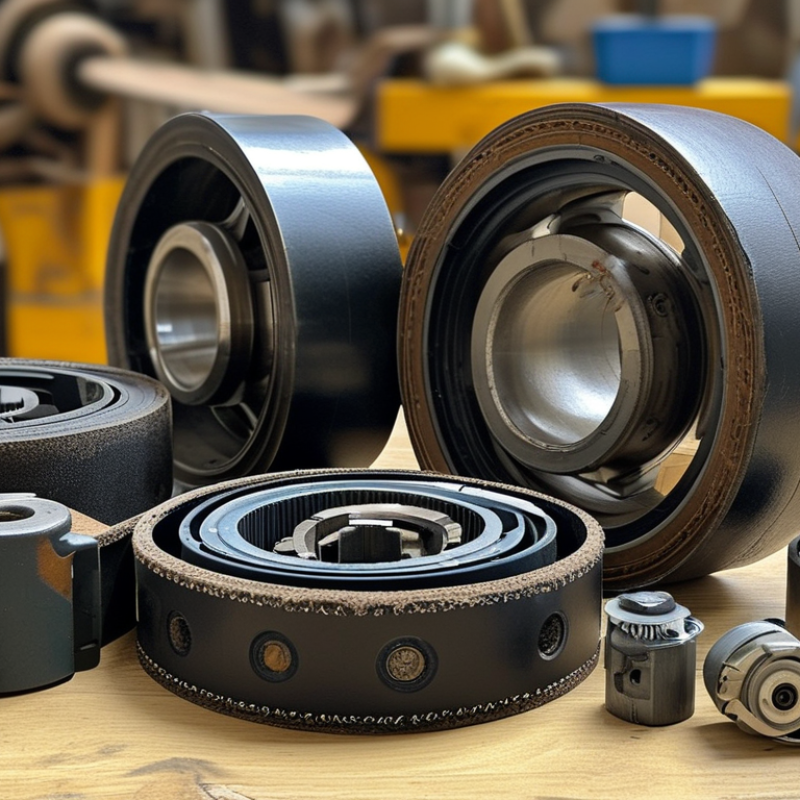
An 8mm HTD pulley is a timing pulley designed for belts with an 8mm tooth pitch. The pitch measures the distance between matching tooth centers. Its curvilinear tooth profile uses rounded sides and valleys. This shape helps the belt tooth enter and leave the pulley smoothly. It also spreads pressure across a wider contact area. That can reduce tooth stress, vibration, and premature wear during repeated motion.
The pulley’s tooth count controls its pitch diameter and affects the driven shaft’s speed. More teeth usually create a larger pulley and smoother engagement. However, tooth count alone does not confirm compatibility. The belt width, bore size, flange design, material, and alignment must also match the application. A practical inspection should check for sharp edges, uneven tooth spacing, and visible runout. I have found that small alignment errors often create noise before obvious damage appears. The profile may look correct, yet the system can still perform poorly.
Tips: Confirm the 8mm pitch before ordering. Match the pulley with the correct HTD belt profile. Keep the shafts parallel and avoid excessive tension. Check the bore and keyway carefully. A loose fit wastes power. A tight fit may distort the pulley. Some selection decisions remain application-dependent, so testing under real load is wise.
| Category | Specification or Buying Dimension | Verified / Practical Information | Why It Matters |
|---|---|---|---|
| Basic Definition | 8mm HTD pulley | A synchronous belt pulley designed for an 8.0 mm tooth pitch. The designation is commonly written as 8M. | The pulley must match an 8M belt; a different pitch will not mesh correctly. |
| Tooth Pitch | 8.0 mm | The center-to-center distance between adjacent pulley tooth spaces measured on the pitch circle. | Pitch determines belt compatibility, pulley diameter, speed ratio, and tooth engagement. |
| Tooth Profile | HTD curvilinear profile | Rounded tooth flanks and a curved tooth-root geometry distribute contact more progressively than a straight-sided trapezoidal profile. | The curved form helps reduce stress concentration, tooth skipping, and localized wear when the system is correctly tensioned. |
| Tooth Engagement | Positive, non-slip timing drive | The belt teeth seat in the pulley grooves and transmit motion through mechanical tooth engagement rather than friction alone. | It provides accurate timing and a predictable speed ratio when tooth engagement and tension are adequate. |
| Pitch Diameter Formula | Dp = N × 8 ÷ π | N is the pulley tooth count. The pitch diameter is measured at the belt pitch line, not at the outside tooth tips. | This value is used to calculate belt speed, pulley ratio, and approximate shaft torque. |
| Minimum Tooth Count | Application-dependent | A smaller pulley produces a tighter belt bend and generally increases tooth and belt stress. The belt and drive manufacturer’s minimum tooth-count rating should be followed. | Choosing too few teeth can reduce service life and increase the risk of tooth ratcheting. |
| Pulley Tooth Count | 20, 24, 30, 36, 40, 48, 60 teeth | These are common selectable tooth counts for 8M timing-drive layouts; actual availability depends on bore, flange, material, and width. | Tooth count controls pulley size and, together with the mating pulley, determines the transmission ratio. |
| Pulley Width | Selected to match the belt width | Common 8M belt widths include approximately 20 mm, 30 mm, 50 mm, and 85 mm, but the pulley face width must provide suitable tooth coverage and side clearance. | A pulley that is too narrow can reduce load capacity; excessive misalignment can cause edge wear. |
| Bore Type | Pilot bore, finished bore, or taper-lock style | The bore must match the shaft diameter and keying method. Finished bores may include a keyway, set-screw provision, or clamping arrangement. | Correct shaft fit prevents slipping, eccentric running, and installation damage. |
| Material Options | Aluminum, steel, stainless steel, or engineering polymer | Steel suits high-load and high-impact service; aluminum reduces rotating mass; stainless steel supports corrosion-sensitive environments; polymers may suit low-load applications. | Material affects strength, inertia, corrosion resistance, temperature capability, and cost. |
| Flange Configuration | Unflanged, single-flanged, or double-flanged | Flanges help retain the belt laterally, but they do not correct poor shaft parallelism or pulley misalignment. | Use flanges where lateral belt movement is possible, while maintaining proper alignment. |
| Speed Ratio | Driven speed ÷ driver speed = driver teeth ÷ driven teeth | For example, a 20-tooth driver and a 40-tooth driven pulley produce a 2:1 reduction, so the driven shaft turns at approximately half the driver speed. | The ratio is determined by tooth count, with minimal slip under normal operation. |
| Center Distance | Must suit the selected belt length | For two pulleys, belt length depends on both pitch diameters and center distance. The final center distance should allow correct installation tension. | Incorrect center distance can cause insufficient tension, excessive tension, or inadequate tooth engagement. |
| Operating Environment | Temperature, dust, moisture, chemicals, and speed | Environmental conditions influence belt compound selection, pulley material, lubrication requirements, guarding, and inspection intervals. | A suitable material and belt construction help maintain dimensional stability and service life. |
| Inspection Checklist | Check pitch, tooth count, width, bore, keyway, flange, material, and alignment | Confirm that the pulley profile is specifically compatible with an 8M HTD belt and inspect for worn teeth, burrs, corrosion, eccentricity, and belt-edge damage. | Matching all interfaces before purchase reduces installation problems and premature drive failure. |
| Tooth Count | Pitch Circumference | Calculated Pitch Diameter | Typical Use Consideration |
|---|---|---|---|
| 20 | 160 mm | 50.93 mm | Compact drive; verify the minimum tooth-count requirement. |
| 30 | 240 mm | 76.39 mm | Balanced choice for moderate speed and compactness. |
| 40 | 320 mm | 101.86 mm | Lower belt-bending severity than a smaller pulley. |
| 60 | 480 mm | 152.79 mm | Suitable where smoother bending and higher belt engagement are desirable. |
Note: Pitch diameters are calculated as tooth count × 8 ÷ π and are not outside diameters. Final pulley dimensions, allowable load, minimum tooth count, bore details, and belt compatibility should be confirmed against the applicable belt and pulley engineering standard.